Bisbee, Arizona
What happened to the Queen Mine, and can you go down into it?
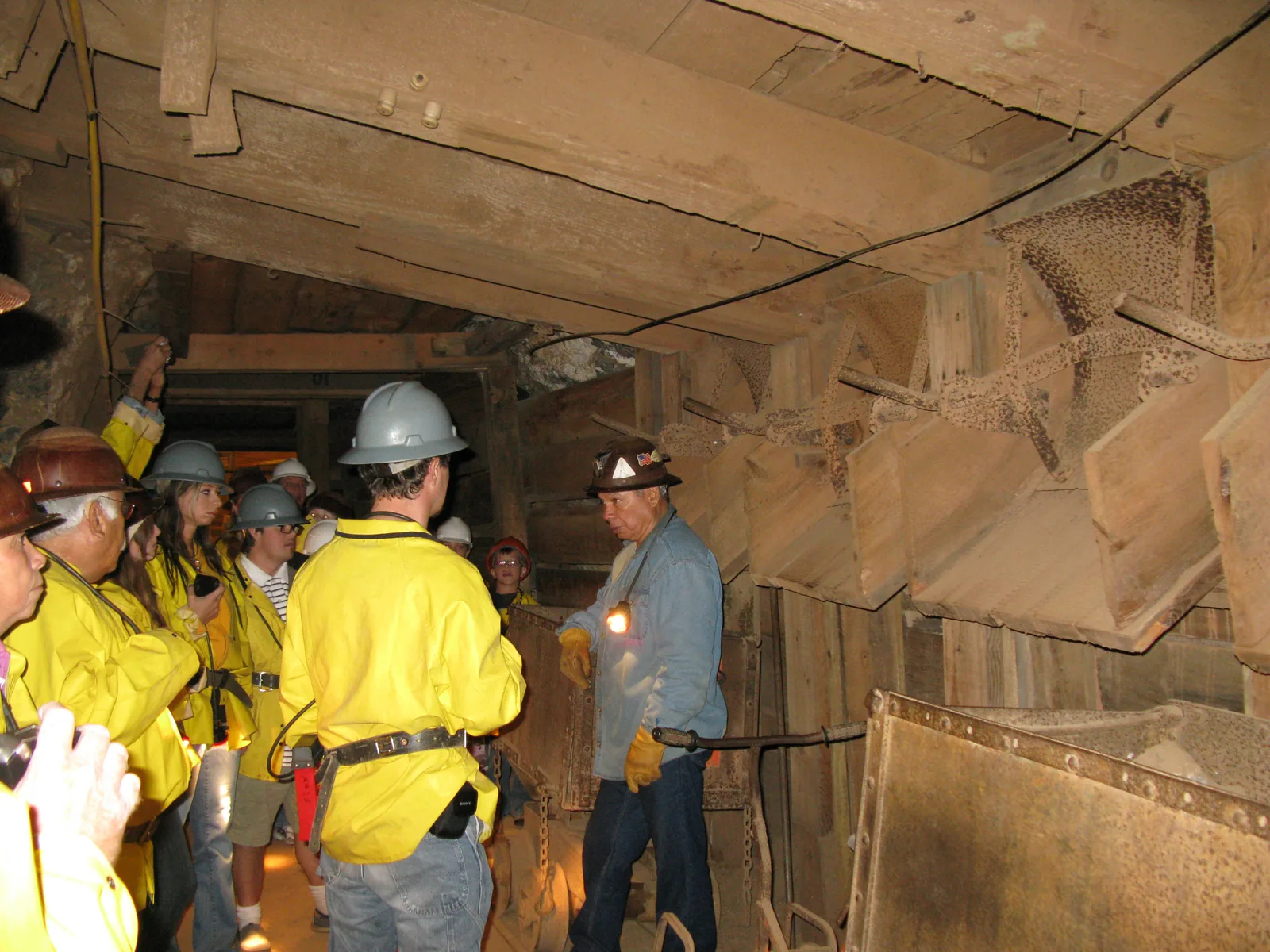
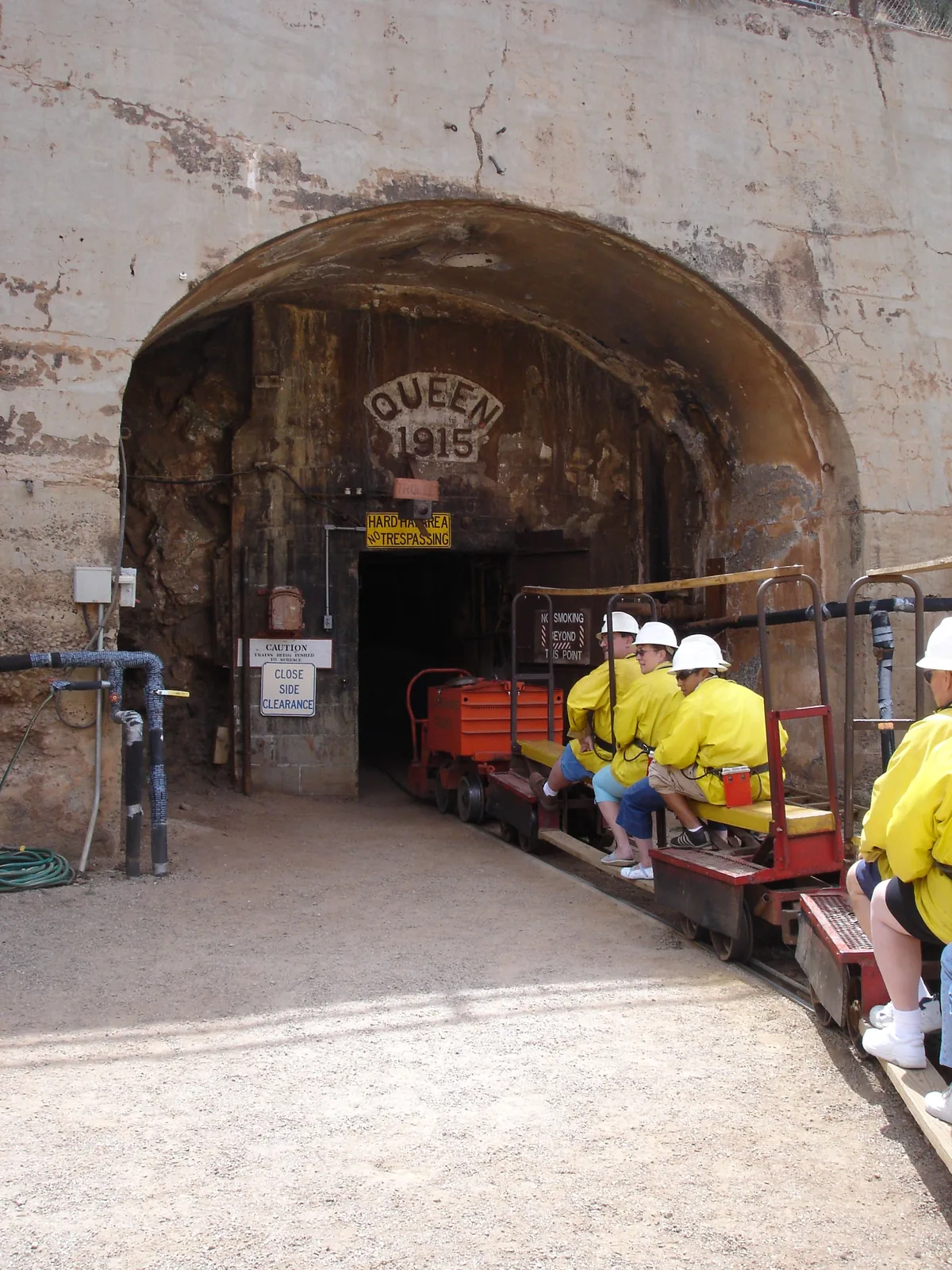
Bisbee kept going after its underground mines closed in 1975. Within months, local volunteers were clearing fallen rock and repairing the workings for visitors. Today you can ride a train into the Queen Mine and hear about the work from retired miners. The tour makes the streets above it easier to understand: the copper brought people here, but the people found a reason to stay.
The ore was the town's whole reason
A cavalry lieutenant named Jack Dunn found copper-stained rock in the Mule Mountains in the late 1870s, and a prospector named George Warren staked the claims. Copper production started around 1880. By 1885 Phelps Dodge ran the district through its Copper Queen Consolidated Mining Company, and it ran it until the end, ninety years later.
The ore was the kind of rich that does not exist anymore. It ran about 23 percent copper. A modern copper mine runs under 1 percent. That is why Bisbee exists at all, and why the town is built the way it is: steep streets, staircases instead of sidewalks in places, houses packed into the canyon because the mine was the employer and the canyon was where the ore was.
The scale is hard to hold in your head, so keep it attached to the district, not the one mine. The Bisbee district produced about 8 billion pounds of copper, plus gold, silver, lead, and zinc, valued at $6.1 billion at 1975 prices. The Queen Mine was the heart of it, not the whole of it. The district's tunnels run more than 2,000 miles underground. The mining museum attributes those figures to the whole district, rather than the Queen Mine alone.
It ended in two steps, not one
Mining in Bisbee did not end on a single day. It ended in two steps, a year apart, and the story gets the order wrong if you collapse them.
The Lavender Pit played out first. Open-pit mining there stopped in December 1974. Then the underground mines closed in the summer of 1975, when the price of copper fell and the ore grade had already dropped to about 4 percent by the mid-1960s. Phelps Dodge shut the underground workings. The town's whole reason for existing vanished in one summer.
The pit that ate a town
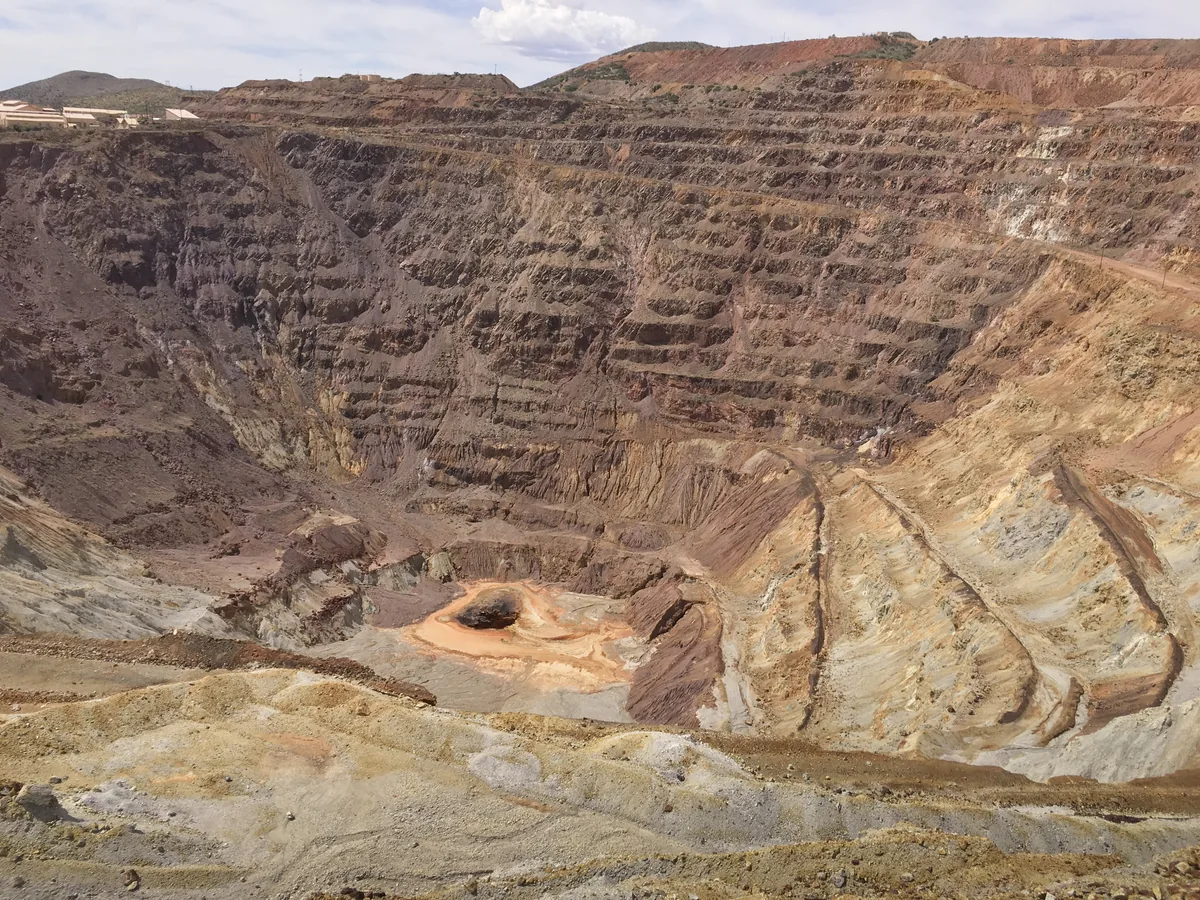
The Lavender Pit is the second half of this story, not its own story. It is the hole every visitor sees from the overlook, and it is the reason the underground mines could not keep going: the pit reached low-grade ore the drifts could not touch.
Harrison Lavender, manager of Phelps Dodge's Copper Queen branch, decided to open the pit in 1951. It is named for him, not for a color. Production began August 7, 1954. By the time it stopped, 351 million tons of material had been removed from 300 acres, and about 600,000 tons of copper had come out of it. The pit swallowed most of the neighboring town of Lowell. What is left of Lowell sits at the pit's edge.
How deep is it? It depends on who measured it. The overlook marker says 850 feet. The museum and the USGS record say 900. The Center for Land Use Interpretation says 950.
Cheap rent saved what copper built
The arts-colony turn has no founding date, and anyone who gives you one is selling something. It started in the late 1970s, after the closure, and the mechanism was rent. Houses were cheap. Artists, craftspeople, and transplants moved into Main Street and Brewery Gulch storefronts because they could afford to. The town did not rebrand. It got cheap enough for people with no other reason to be there to move in.
Mayor Chuck Eads pushed the town toward tourism deliberately, and the mine tour was the centerpiece. It opened to visitors on February 1, 1976, six months after the underground closed, with Phelps Dodge's cooperation, volunteer labor clearing fallen rock and re-timbering, and a federal Economic Development Administration grant to the City of Bisbee. More than a million visitors have gone down since, from all 50 states and more than 30 foreign countries. The people leading the tours are retired Phelps Dodge miners. The town did not hire actors to play miners. It hired the miners.
Going down today
Start with the mine tour if you want to understand the work beneath Bisbee’s streets. The City of Bisbee runs it from 478 N Dart Road. Five tours a day, seven days a week, year-round: 9:00, 10:30, 12:00, 2:00, and 3:30. It takes about an hour. The train goes about 1,500 feet into the mountain, a half-mile round trip with two stops. It is 47 degrees underground, all year, so bring a layer even in August. Arrive 30 minutes early. Reservations are required. Children 5 and under are not allowed underground. Phone: (520) 432-2071.
Adults 13 and over pay $18. Children 6 to 12 pay $9. Taxes are included. Prices checked November 15, 2026.
The pit overlook is free and on the way. Do the tour first and the overlook second. Underground, you encounter the working spaces at the scale of a person. At the overlook, you see how open-pit mining changed the landscape. The two visits explain different parts of the same town.
Select a passage, then Share to send it with a link.
Questions, answered
- Can you go down into the Queen Mine?
- Yes. The City of Bisbee runs the tour from 478 N Dart Rd, five tours a day, seven days a week, year-round: 9:00, 10:30, 12:00, 2:00, and 3:30. It takes about an hour. The train goes about 1,500 feet into the mountain. It is 47 degrees underground all year. Arrive 30 minutes early. Reservations are required. Children 5 and under are not allowed underground. Adults 13 and over pay $18; children 6 to 12 pay $9, taxes included. Prices checked November 15, 2026.
- When did the Queen Mine close?
- Mining in Bisbee ended in two steps: open-pit mining in the Lavender Pit stopped in December 1974, and the underground mines closed in the summer of 1975, when the price of copper fell.
- How deep is the Lavender Pit?
- It depends on who measured it. The overlook marker says 850 feet, the museum and the USGS record say 900, and the Center for Land Use Interpretation says 950. The page keeps the range with the sources named.
- Who leads the Queen Mine tours?
- Retired Phelps Dodge miners. The tour opened February 1, 1976, six months after the underground closed, with the miners who had worked it leading visitors down.
- What happened to Lowell, the town next to the pit?
- The Lavender Pit swallowed most of it. What is left of Lowell sits at the pit's edge. The pit is named for Harrison Lavender, the Phelps Dodge manager who decided to open it in 1951, not for a color.
Sources
Checked November 15, 2026.
- City of Bisbee: district history and the transition after mining
- Copper Queen Mine Tour official history page (copperqueenmine.com/about-us). Discovery (Dunn, Warren), production from about 1880, Phelps Dodge via Copper Queen Consolidated, underground closed summer 1975, tour opened February 1, 1976, Mayor Chuck Eads, EDA grant, volunteer labor, more than a million visitors.
- Queen Mine Tour official site (queenminetour.com / copperqueenmine.com). Run by the City of Bisbee, 478 N Dart Rd, Bisbee, AZ 85603, (520) 432-2071. Tour times in the booking widget, not text-readable. Tour duration from the Mine Tour page: "Tours last approximately 1 hour."
- USGS Mineral Resources Data System, Lavender Pit (dep_id 10046238), citing Arizona Bureau of Mines Bulletin 187 (Keith, 1973). Pit production: about 600,000 tons copper; 86 million tons of ore at about 0.7 percent.
- Center for Land Use Interpretation, Lavender Pit entry (clui.org). Pit dates, 351 million tons of material removed, 950-foot depth, rim viewing platforms.
- Bisbee Mining & Historical Museum, postcard archive and museum material. District-wide production figures (about 8 billion pounds copper, $6.1 billion at 1975 prices); Queen-Mine-only early figure (20 million pounds, richest ore 30 percent, mined out by 1884).
- Mining History Association, 1998 Bisbee field trip (mininghistoryassociation.org/BisbeeFieldTrip2.htm). Pit dates, Lowell swallowed by the pit.
- Arizona Geological Survey. Pit ore counted more narrowly at about 75 million tons, 1954 to 1970.
- greenthumbhobbies.com (November 2, 2026) and a second November 2026 Arizona travel post. Newest tour times and prices ($18 adult / $9 child).
- daytrippen.com, bisbeeaz.com, Tripadvisor reviews (January to July 2026). Older prices ($16 adult / $8 child).
- Arizona environmental-leadership oral-history archive. Arts turn, late 1970s, cheap rent, arrivals 1969 to 1980, rents as low as $30 a month. Mayor Eads tourism push (Mike Anderson interview).
- Wikipedia, Copper Queen Mine. 23 percent ore grade, 1885 acquisition, grade decline to about 4 percent by the mid-1960s. Secondary; the museum's Digging In exhibit is the primary check.
More from Bisbee
- What is the Bisbee 1000, and is it worth climbing?
Bisbee's stairs were mule paths before they were a race. Once a year the town climbs all 1,034 steps, and the rest of the year you can walk them free.
More to read
- Cottonwood’s chocolate shop began in a Michigan kitchen
The Michigan kitchen behind a Cottonwood chocolate shop, with truffle fillings to explore and a box to take home.
- A bookshop with a life after the last page
A bookshop that still acts like a small arts institution. Open daily in the Saint George lobby, with a gallery show on the record in June 2026.
- A quieter night under St. Augustine’s lights
More than three million white lights, free, over the oldest city in the country. Go on a weeknight, park once, and walk.