Cottonwood, Arizona
Why does Cottonwood exist?
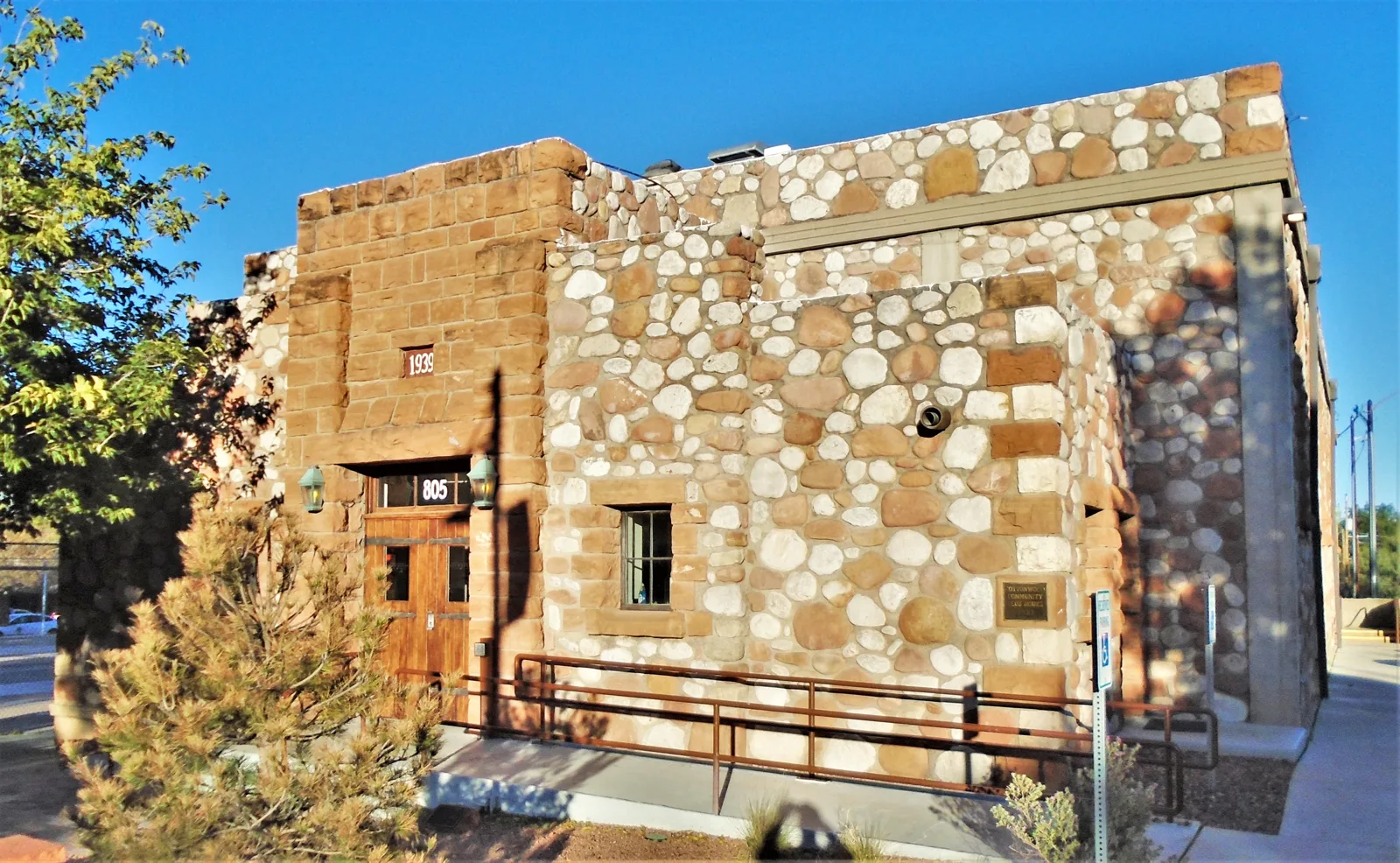
Cottonwood is the town the copper mines needed but never owned. Jerome got the mines and the legend. Clarkdale got the company plan and the smelter for William Clark's United Verde. Cottonwood got the farmers, the ranchers, the shopkeepers, and the people who did not want to live in a company town. That is still the difference, a hundred years later.
The river came first, by about 900 years
Long before any mine, the Verde River made this valley farmable. The Southern Sinagua built a pueblo on a ridge above the river at Tuzigoot, just outside present-day Clarkdale, starting around 1100 and adding rooms for the next 300 years. At its height it was 110 rooms, two and three stories, built of limestone and clay. The name is Tonto Apache for "crooked water," for the river's meander nearby. The people left around 1400 to 1450, for reasons nobody has settled. Drought north of the valley and migration are the usual theories. There is no evidence of a sudden catastrophe.
The pueblo sat unexcavated until the Depression, when archaeologists Louis R. Caywood and Edward H. Spicer dug it out between 1933 and 1935 with Civil Works Administration labor. Franklin D. Roosevelt made it a national monument on July 25, 1939. It is the oldest story in the valley and the easiest one to miss, because it sits a few miles off Main Street and most visitors drive straight past it toward Sedona.
A farming town that fed the mines
Jerome is a hillside you visit. Cottonwood is a flat valley town you stay in, buy groceries in, and drive out of in the morning. The wine tasting rooms on Main Street are new. The reason the town is here is not.
Cottonwood itself grew gradually, not from a single founding. Settlers arrived in the late 1870s and early 1880s, drawn by the river and the cottonwood trees, and sold hay, grain, and beef to the mining camps at Jerome and Camp Verde. Charles Willard, called the father of Cottonwood, was among the first. His son G. M. "Mac" Willard established the first post office on July 9, 1885. By 1910 Cottonwood was a recognizable town with a business core, which is to say it was a real town before copper made it a busy one.
That farming base matters. It is why Cottonwood survived what came next and why it does not feel like a mining museum. The town was never a company town. It was the place outside the company towns where independent businesses could exist.
The smelter years: two smelters, one town between them
The copper is what made Cottonwood grow fast. Jerome's mines sat on a steep, unstable hillside. You could not smelt there at scale. So the smelters went down in the valley, where there was flat land and water and, once the railroads arrived, a way to move ore.
In 1915 to 1917, Cottonwood built its town center between two smelters. On April 23, 1916, James S. Douglas decided to build a smelter for his United Verde Extension mine on land about a mile south of Cottonwood. The first copper anode was cast there on July 18, 1918. The site was first called Verde. In 1920 it was renamed Clemenceau, for Georges Clemenceau, the French premier in World War I and a personal friend of Douglas. The smelter town had homes for workers, a school, a bank, and a clubhouse, and its population ran between 1,000 and 5,000.
Getting the ore down the hill was its own engineering job. The Arizona Extension Railway ran from Clemenceau to the eastern portal of the 2.5-mile Josephine Tunnel, which connected through to the UVX mine at Jerome. The Verde Tunnel and Smelter Railroad ran from 1915 to 1953. For twenty years, the valley's whole economy was a loop: ore down from Jerome, copper out by rail, paychecks spent in Cottonwood.
It ended the way mining always ends. The Clemenceau smelter closed in 1937. Most of its residents left. The smelter buildings were largely demolished, including the smokestack, though some structures survived, and the complex is listed on the National Register of Historic Places. Cottonwood incorporated on November 14, 1960, and Clemenceau, with its old airport, came inside the city limits.
The road that tells the story in 10 miles
If you have half a day, drive Highway 89A from Jerome down through Clarkdale to Cottonwood. It is about 10 miles and it is the whole history in order: the mine on the hill, the planned company town and the railroad in the middle, and the independent farm town at the bottom that outlasted them both. Clarkdale was built by William A. Clark to house workers for his processing mills. Cottonwood was where the ranchers, farmers, and business people set up outside the company towns. You can still read that division in the street grids.
Old Town Cottonwood keeps the bones. The Cottonwood Hotel, at 930 N Main Street, was built in 1917 and rebuilt in 1925. The Clemenceau Heritage Museum sits in the old Clemenceau School, which ran from 1924 to 1986, and holds the mining, ranching, and farming archives. The smelter smoke did real damage while it lasted: acid precipitation from the smelters, from 1917 to the late 1930s, damaged the river greenway's trees, and neighboring orchards lost as much as 30 percent of their fruit trees. After the smelters closed, the corridor recovered through the 1940s to the 1970s.
What to see, in one afternoon
Start at Tuzigoot, early, before the heat. The pueblo is small and the walk is short, but standing on the ridge is the fastest way to understand the valley: river below, farmland in the floodplain, mines on the hill behind you. Then drive 89A down through Clarkdale and into Old Town. Walk Main Street. The museum is the stop that ties it together, a company-town schoolhouse full of the things the smelter years left behind. Stay for dinner on Main if you are passing through on a Friday. Cottonwood is the practical base for the valley, which is the same job it has done since the 1880s: feed people, house people, and send them out in the morning.
Tuzigoot is open daily 9:00 AM to 4:45 PM, last entry 4:45 PM, closed Thanksgiving, December 25, and January 1. Entry is $10 for adults 16 and over, covers Montezuma Castle, and is good for 7 days; 15 and under are free. The Clemenceau Heritage Museum, at 1 North Willard Street, is open Tuesday and Wednesday 9 AM to 12 noon and Friday and Saturday 11 AM to 3 PM, closed Sunday, and admission is free. Hours and fees checked November 16, 2026.
Select a passage, then Share to send it with a link.
Questions, answered
- Why does Cottonwood exist?
- Cottonwood grew as the independent farming and business town between the company towns. It fed the mines at Jerome, housed the people who did not want to live in a company town, and outlasted the smelters because no company owned it.
- When was the Cottonwood Hotel built?
- The Cottonwood Hotel at 930 N Main Street was built in 1917 and rebuilt in 1925.
- What are Tuzigoot's hours and entry fee?
- Tuzigoot is open daily 9:00 AM to 4:45 PM, last entry 4:45 PM, closed Thanksgiving, December 25, and January 1. Entry is $10 for adults 16 and over, covers Montezuma Castle, and is good for 7 days. 15 and under are free. Checked November 16, 2026.
- What are the Clemenceau Heritage Museum's hours?
- Tuesday and Wednesday 9 AM to 12 noon, Friday and Saturday 11 AM to 3 PM, closed Sunday. Admission is free. The museum is at 1 North Willard Street. Checked November 16, 2026.
- Is the Clemenceau smokestack still standing?
- No. Most of the smelter structures, including the smokestack, were demolished after the smelter closed in 1937. Some structures survive, including the former Clemenceau school that now holds the heritage museum, and the complex is listed on the National Register of Historic Places.
Sources
Checked November 16, 2026.
- Briggs, D. F., 2018, History of the Verde Mining District, Jerome, Arizona. Arizona Geological Survey Contributed Report CR-18-D. Smelter site decision April 23, 1916; first anode cast July 18, 1918; Verde Tunnel and Smelter Railroad 1915 to 1953; Arizona Extension Railroad 1918 to 1938.
- Reha, Mark K., July 2026, Cottonwood, Arizona: A Historical and Industrial Study. Settlement late 1870s to early 1880s; town recognizable by 1910. Self-published study, used for structure; key dates cross-checked against Briggs.
- UVX Mining Co., Wikipedia, citing Killebrew and Freund (2011), Images of America: Cottonwood. Smelter complex operational 1917 to 1937, National Register listed; Clemenceau school 1924; many original smelter structures, including the smokestack, demolished.
- Clemenceau, Cottonwood. Company town built 1917, originally named Verde, renamed Clemenceau 1920 for Georges Clemenceau; population 1,000 to 5,000; smelter closed 1937; included in Cottonwood on incorporation in 1960; museum in the old school, 1924 to 1986.
- Historic Facts About Cottonwood, AZ, Arizona Women of the Old West. Charles Willard among first settlers; first post office July 9, 1885, by G. M. "Mac" Willard; town built between two smelters 1915 to 1917; incorporated November 14, 1960.
- Tuzigoot National Monument, U.S. National Park Service. Southern Sinagua pueblo built around 1100, rooms added into the 1400s, abandoned around 1450 for unknown reasons; about 50 people lived in the pueblo itself.
- Tuzigoot National Monument, Clio. Built 1100 to 1425, 110 rooms, excavated 1933 to 1935 by Caywood and Spicer, designated a national monument July 25, 1939.
- Tuzigoot National Monument and the Sinagua People, Intermountain Histories. Sinagua in the Verde Valley circa 1000 to 1450 CE; excavation 1933 to 1935; name meaning.
- Jerome, Clarkdale and Cottonwood Historic Road, The Armchair Explorer. 10-mile route on State Highway 89A tying the three towns together; Cottonwood as the ranchers' and business town outside the company towns.
- Assessment of Human Influence on Riparian Change in the Verde Valley (Northern Arizona University). Acid precipitation from smelter smoke, 1917 to the late 1930s, damaged riparian trees; neighboring orchards lost as much as 30 percent of their fruit trees; recovery 1940s to 1970s.
- National Park Service, Tuzigoot fees and hours pages (checked November 15, 2026; rechecked November 16, 2026). Hours, fee, closures.
- Clemenceau Heritage Museum, official site (checked November 15, 2026; rechecked November 16, 2026). Hours, free admission, address, Sunday closed.
- Wikipedia, List of historic properties in Cottonwood, Arizona, citing the hotel's own history material; the hotel's tour listing; greatevent.com (checked November 15, 2026). Cottonwood Hotel built 1917, rebuilt 1925, 930 N Main Street.
More from Cottonwood
- Cottonwood’s Chocolate Walk puts dessert first
Chocolate, independent shops and holiday lights on December 5, with a local chocolatier to explore before the walk.
- Cottonwood’s chocolate shop began in a Michigan kitchen
The Michigan kitchen behind a Cottonwood chocolate shop, with truffle fillings to explore and a box to take home.
- A grocery store’s second life in Old Town Cottonwood
A 1925 grocery-store building became a family-run hotel. Choose it for evenings on Old Town’s Main Street, with the right room for your group.
More to read
- A bookshop with a life after the last page
A bookshop that still acts like a small arts institution. Open daily in the Saint George lobby, with a gallery show on the record in June 2026.
- A quieter night under St. Augustine’s lights
More than three million white lights, free, over the oldest city in the country. Go on a weeknight, park once, and walk.
- Can you get to Cooke City in winter, and is the Lamar Valley dawn worth the drive?
One road in, 77 people, and the best wolf watching in the country at dawn. One night is enough, and it is the point.